About Dr. Lynch
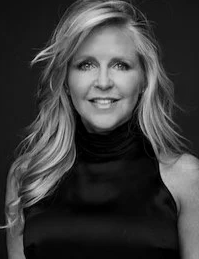
Looking back on my career, I can see a clear thread running through it: a longstanding interest in understanding what shapes us, what motivates us, how we adapt, and what allows us to change.
I spent the first nineteen years in the corporate world, experiencing firsthand the demands of leadership, achievement and organizational life, as well as the particular complexities women can encounter as they advance. Much of my work during those years centered on organizational psychology, through executive education at Harvard and MIT, and through work with Gallup. We wanted to understand our employees and customers. Why do some people become deeply engaged in their work while others withdraw? What makes people stay, and what makes them leave? What builds trust and loyalty? These were, at heart, psychological questions.
My work also involved extensive travel across the country. Looking for ways to manage the pace and stress of that life, I became increasingly interested in mind-body practices and mindfulness. Over time, that interest led to a deeper recognition of how profoundly emotional well-being, and trauma, shape people's lives. Eventually, I made the decision to move from my corporate role into clinical practice, where I could work with people more directly.
As my clinical work deepened, so did my questions. Beyond helping someone find relief from a symptom, I became increasingly interested in understanding why a difficulty had developed, why certain patterns persisted despite a person's best efforts, and how the past continues to live in our relationships, choices and ways of experiencing ourselves. That is what drew me to psychoanalytic training at the Dallas Psychoanalytic Center, where I am a scholar-candidate. Psychoanalytic training is among the most in-depth in the mental health field. It continues for many years beyond a doctorate and includes rigorous study of theory and development, intensive supervised clinical work, and personal analysis.
At the same time, I value what focused, well-researched approaches can offer for some of the most common struggles people face today. I have trained extensively in Attachment-Focused EMDR for trauma and distressing experiences, and in SPACE, the Yale University’s program for parents of anxious children, including advanced training in its adaptation for parents of young adults who are struggling to launch. I bring a psychodynamic understanding to all of this work.
Today, my approach brings these experiences together. I understand the worlds of work, leadership, ambition and responsibility from having lived in them. I understand the value of focused approaches when a particular problem calls for them. And my psychoanalytic training continually reminds me to remain curious about what lies beneath the immediately visible problem.
The question is not simply, What is wrong, and how do we make it stop? It is also: Why has this taken the particular shape it has in this person's life? What has it meant? What has it protected? And what might become possible if it no longer has to?
For me, good therapeutic work begins there, with curiosity about the whole person and enough flexibility to meet them where they are.
Much of what I know, I have learned from the people I've worked with, and I remain grateful for the trust they place in me.